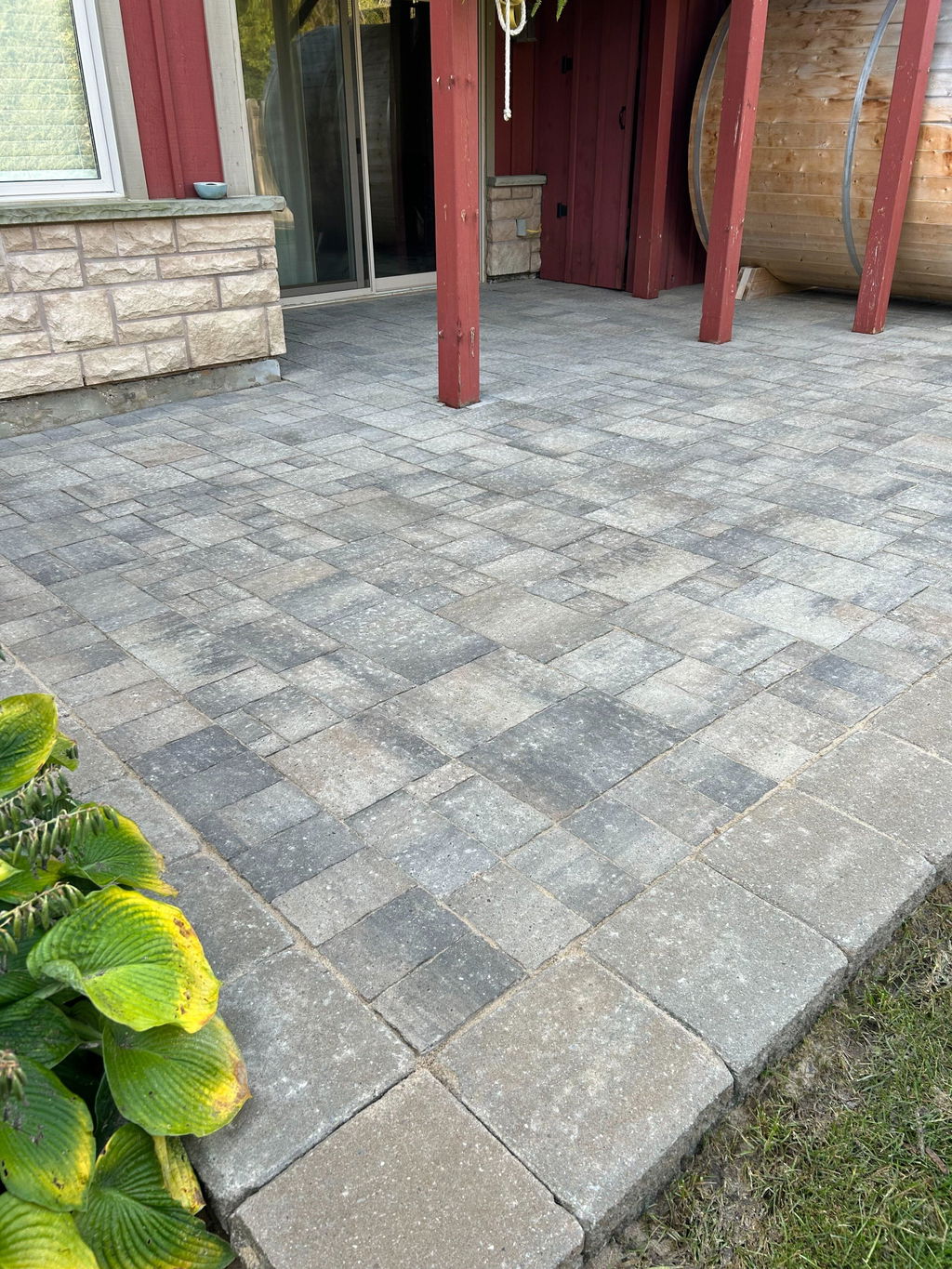
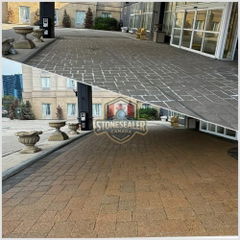
Trident's deepest wet look and strongest joints
Trident Hurricane CAT 5 | 2 Part Urethane Sealer | 7 Gal Kit (Makes 15-20 Gal)


- Regular price
- $1,299.00
- Fast, tracked shipping
- Prices in CAD
Trident Hurricane CAT 5 is a super-concentrated, water-based 2-part aliphatic urethane sealer for pavers and concrete with the deepest wet-look enhancement, high gloss and Trident's strongest joint sand stabilization. One 7 gal kit makes 15 gallons ready to use at D1, or 20 gallons at D2. Stocked in Canada.
- 7 gal kit = 15 gal (D1) / 20 gal (D2)
- Wet look, high gloss
- Stocked in Canada
- Low VOC
Key benefits
Why choose Trident Hurricane CAT 5
-
Deepest wet look
Deepest colour enhancement and high gloss (T3 True Tone Technology)
-
Strongest Armor Bond
Armor Bond: strongest joint stabilization to reduce sand washout, weeds and insects
-
Salt and chemical guard
Guards against salt, mild acid, alkali and other corrosives
-
Fungal Guard
Antifungal Fungal Guard protects the film from mould, moss and algae
-
Breathable
Breathable: will not trap efflorescence or moisture; apply to new, clean, dry surfaces without waiting
-
Non-yellowing, low VOC
Will not yellow in sunlight; low VOC
At a glance
Specifications
| Type | 2-part water-reducible clear aliphatic urethane, film forming |
|---|---|
| Finish | Wet look, high gloss |
| Kit | 7 gal kit: one 5 gal pail Part A + two 1 gal Part B |
| Yield (ready to use) | 15 gal ready to use at D1 ratio; 20 gal ready to use at D2 ratio (per 7 gal kit) |
| Choosing a ratio | D1: more gloss and stronger joint stabilization. D2: leaner, economy ratio |
| Coverage (mixed) | 80-120 sq ft/gal with joint stabilization; 200-300 sq ft/gal sealing only |
| Recoat | When first coat has cleared and is dry to touch, usually about 1 hour |
| VOC | Low VOC |
| Surfaces | Concrete, stamped concrete, concrete wall block, clay pavers, natural stone, manufactured stone, travertine, exposed aggregate |
Works on
- Concrete
- Stamped concrete
- Concrete wall block
- Clay pavers
- Natural stone
- Manufactured stone
- Travertine
- Exposed aggregate
How to use
Step-by-step application
-
Clean and dry
Clean the surface (OxyShock MAX for organics, EffBOMB for efflorescence) and let it dry; for joint stabilization the surface must be dry.
-
Re-sand joints
Re-sand joints with SEK Jointing Sand if needed.
-
Mix and dilute
Mix Part A and Part B, then dilute with water at the D1 ratio (one 7 gal kit makes 15 gal ready to use) or the D2 ratio (20 gal ready to use), following the Trident label. D1 gives more gloss and stronger joint sand stabilization; D2 is the leaner, economy ratio.
-
Test an area
Test in a small area to verify appearance.
-
Flood coat
Apply the first coat as a flood coat at 80-120 sq ft per gallon (mixed) to saturate the joints, with no pooling.
-
Second coat
Apply the second coat once the first has visually cleared and is dry to the touch, usually about one hour.
Compare
How Trident Hurricane CAT 5 compares
Side-by-side with alternatives from our catalogue.
| Feature | CAT 5 | Cyclone | Break Wall |
|---|---|---|---|
| Type | 2-part urethane, water based, film forming | Water based, film forming | Silane/siloxane, penetrating; made by Trident in Illinois, USA |
| Finish | Wet look, high gloss | Matte, natural | Invisible |
| Joint stabilizing | Yes (strongest) | Yes | No |
| Coverage (per gal, manufacturer) | 80-120 sq ft with joints; 200-300 sealing only (mixed) | 80-120 sq ft with joints; 150-250 sealing only | 75-200 sq ft pavers; 100-200 concrete |
Swipe the table sideways to compare.
Full product details
Trident Hurricane CAT 5 is a super-concentrated, water-based 2-part aliphatic urethane sealer for pavers and concrete that gives the deepest wet-look colour enhancement, a high-gloss finish and Trident's strongest Armor Bond joint sand stabilization. One 7 gal kit makes 15 gallons of ready-to-use sealer at the D1 dilution ratio, or 20 gallons at the D2 ratio. D1 gives more gloss and stronger joint sand stabilization; D2 is the leaner, economy ratio. It is stocked in Canada and recommended for professional application.
Key benefits of CAT 5
- Deepest colour enhancement and high gloss (T3 True Tone Technology)
- Armor Bond: strongest joint stabilization to reduce sand washout, weeds and insects
- Guards against salt, mild acid, alkali and other corrosives
- Antifungal Fungal Guard protects the film from mould, moss and algae
- Breathable: will not trap efflorescence or moisture; apply to new, clean, dry surfaces without waiting
- Will not yellow in sunlight; low VOC
CAT 5 specifications
| Specification | Detail |
|---|---|
| Type | 2-part water-reducible clear aliphatic urethane, film forming |
| Finish | Wet look, high gloss |
| Kit | 7 gal kit: one 5 gal pail Part A + two 1 gal Part B |
| Yield (ready to use) | 15 gal ready to use at D1 ratio; 20 gal ready to use at D2 ratio (per 7 gal kit) |
| Choosing a ratio | D1: more gloss and stronger joint stabilization. D2: leaner, economy ratio |
| Coverage (mixed) | 80-120 sq ft/gal with joint stabilization; 200-300 sq ft/gal sealing only |
| Recoat | When first coat has cleared and is dry to touch, usually about 1 hour |
| VOC | Low VOC |
| Surfaces | Concrete, stamped concrete, concrete wall block, clay pavers, natural stone, manufactured stone, travertine, exposed aggregate |
Who it is for
- Hardscape and sealing contractors
- Driveways, pool decks and patios needing maximum durability and gloss
Not recommended for
- Marble, granite, ceramic tile and polished, honed or high-gloss surfaces (not enough texture to absorb the sealer)
How to use CAT 5
- Clean the surface (OxyShock MAX for organics, EffBOMB for efflorescence) and let it dry; for joint stabilization the surface must be dry.
- Re-sand joints with SEK Jointing Sand if needed.
- Mix Part A and Part B, then dilute with water at the D1 ratio (one 7 gal kit makes 15 gal ready to use) or the D2 ratio (20 gal ready to use), following the Trident label. D1 gives more gloss and stronger joint sand stabilization; D2 is the leaner, economy ratio.
- Test in a small area to verify appearance.
- Apply the first coat as a flood coat at 80-120 sq ft per gallon (mixed) to saturate the joints, with no pooling.
- Apply the second coat once the first has visually cleared and is dry to the touch, usually about one hour.
Using CAT 5 in the Canadian climate
CAT 5 guards against salt and corrosives, which matters on Canadian driveways exposed to de-icers. It is breathable and will not trap moisture. Trident's TDS calls for day and night temperatures between 7 and 35°C (45-95°F), with at least 4°C (40°F) for 24 hours before application. Allow 24 hours before foot traffic and 48 hours before vehicles.
CAT 5 compared
| Product | Type | Finish | Joint stabilizing | Coverage (per gal, manufacturer) |
|---|---|---|---|---|
| CAT 5 | 2-part urethane, water based, film forming | Wet look, high gloss | Yes (strongest) | 80-120 sq ft with joints; 200-300 sealing only (mixed) |
| Cyclone | Water based, film forming | Matte, natural | Yes | 80-120 sq ft with joints; 150-250 sealing only |
| Break Wall | Silane/siloxane, penetrating; made by Trident in Illinois, USA | Invisible | No | 75-200 sq ft pavers; 100-200 concrete |
| AquaBlocka | Waterborne impregnating emulsion, 0 VOC, penetrating | Natural | No | Ask us for coverage on your surface |
| SP Paver Enhancing | Penetrating | Colour enhanced, no sheen | No | See label |
CAT 5 FAQ
D1 or D2: which CAT 5 ratio should I use?
Use D1 (one 7 gal kit makes 15 gallons ready to use) when you want more gloss and stronger joint sand stabilization. D2 (20 gallons ready to use) is the leaner, economy ratio for jobs where maximum gloss and joint strength are less critical.
Is Trident CAT 4 still available?
No. Trident CAT 4 has been discontinued and we no longer stock it. CAT 5 is the 2-part urethane we carry: it gives the deepest wet look, high gloss and the strongest joint stabilization, and makes 15 gallons per 7 gal kit at the D1 ratio or 20 gallons at D2.
How much area does a CAT 5 kit cover?
One 7 gal kit makes 15 gallons ready to use at the D1 ratio or 20 gallons at D2. At 80-120 sq ft/gal with joint stabilization that is about 1,200-1,800 sq ft per coat (D1) or 1,600-2,400 sq ft per coat (D2); sealing only, plan on 200-300 sq ft/gal.
Can I seal new pavers right away?
Trident states CAT 5 can be applied on most new, clean and dry surfaces without waiting, because it is breathable.
Is CAT 5 DIY friendly?
It is recommended for professional use.
Will CAT 5 yellow?
No, it will not yellow under sunlight.
Can I use CAT 5 on granite?
No. It is not recommended for marble, granite, ceramic tile or polished surfaces.
How much sealer does one CAT 5 kit make?
One 7 gal kit makes 15 gallons of ready-to-use sealer at the D1 ratio or 20 gallons at the D2 ratio. The CAT 5 half kit is not stocked in Canada.
Use with
- Prep: EffBOMB Efflorescence Remover and OxyShock MAX
- Sand: Trident SEK Jointing Sand
- Apply: MonsterWash Sealer Pail Sprayer Cart
- Remove old sealer: Trident Tidal Wave X
- Browse Paver and Concrete Sealers
StoneSealer Canada ships across Canada from British Columbia, priced in CAD. Contractor and volume pricing is available to account holders: email sales@stonesealer.ca. Trident Protects technical data sheets and SDS are available on request; we can also help you plan quantities for your project.
Where to Buy
Loading store availability…
FAQ
Frequently asked questions
Still unsure which product fits your surface? Our team answers product and application questions.
Ask our teamD1 or D2: which CAT 5 ratio should I use?
Use D1 (one 7 gal kit makes 15 gallons ready to use) when you want more gloss and stronger joint sand stabilization. D2 (20 gallons ready to use) is the leaner, economy ratio for jobs where maximum gloss and joint strength are less critical.
Is Trident CAT 4 still available?
No. Trident CAT 4 has been discontinued and we no longer stock it. CAT 5 is the 2-part urethane we carry: it gives the deepest wet look, high gloss and the strongest joint stabilization, and makes 15 gallons per 7 gal kit at the D1 ratio or 20 gallons at D2.
How much sealer does one CAT 5 kit make?
One 7 gal kit makes 15 gallons of ready-to-use sealer at the D1 ratio or 20 gallons at the D2 ratio. The CAT 5 half kit is not stocked in Canada.
How much area does a CAT 5 kit cover?
One 7 gal kit makes 15 gallons ready to use at the D1 ratio or 20 gallons at D2. At 80-120 sq ft/gal with joint stabilization that is about 1,200-1,800 sq ft per coat (D1) or 1,600-2,400 sq ft per coat (D2); sealing only, plan on 200-300 sq ft/gal.
Can I seal new pavers right away?
Trident states CAT 5 can be applied on most new, clean and dry surfaces without waiting, because it is breathable.
Is CAT 5 DIY friendly?
It is recommended for professional use.
Will CAT 5 yellow?
No, it will not yellow under sunlight.
Can I use CAT 5 on granite?
No. It is not recommended for marble, granite, ceramic tile or polished surfaces.
Use with
Pairs well with
-
 StoneSealer Canada
EffBOMB Efflorescence Remover Concentrate | Safer Acid AlternativeFrom $65.00
StoneSealer Canada
EffBOMB Efflorescence Remover Concentrate | Safer Acid AlternativeFrom $65.00
-
 StoneSealer Canada
OxyShock MAX Non-Bleach Organics Cleaner | 10:1 ConcentrateFrom $85.99
StoneSealer Canada
OxyShock MAX Non-Bleach Organics Cleaner | 10:1 ConcentrateFrom $85.99
-
 Trident Protects USA
Trident SEK Premium Paver Jointing Sand | Black Colour | 50LB Bag$50.00
Trident Protects USA
Trident SEK Premium Paver Jointing Sand | Black Colour | 50LB Bag$50.00
-
 Trident Protects USA
Trident SEK Premium Paver Jointing Sand | Fieldstone Colour | 50LB Bag$49.99
Trident Protects USA
Trident SEK Premium Paver Jointing Sand | Fieldstone Colour | 50LB Bag$49.99